
Our Mission
The Abakanowicz Arts and Culture Charitable Foundation (AACCF) began operations in 2019, having been established by the artist and her husband Jan Kosmowski twenty years earlier to carry on their legacy. Since 2026, AACCF has been a member of World Art Foundations.
The mission of the Foundation is to fund or organize programs that investigate concepts of human creativity, the role of art as a visual language within cultures and dynamic force within contemporary society, and the intersection of art and other modes of inquiry for the purposes of extending the meaning and relevance of Magdalena Abakanowicz’s life, art, and vision for humanity.
Our Impact Areas
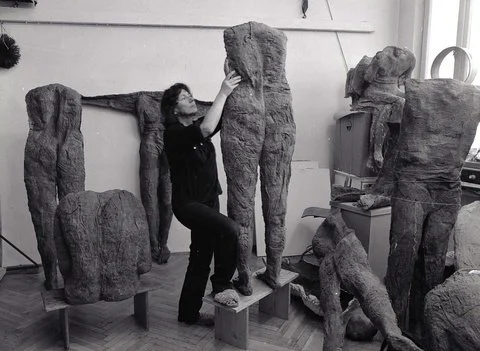
I. CREATIVE INQUIRY + PRACTICE
Artistic Development
Artistic development encompasses the time, resources, and freedom needed to realize creative expression and sustain a practice. Abakanowicz’s resistance to imposed conventions as a student and educator, together with her continual reinvention, underscores the importance of mentorship, access to materials and spaces, and opportunities for artists at every stage to shape their own creative directions.
Learning
Through Exchange
Learning through exchange occurs through conversation, experiential practice, and encounters across generations and communities. Abakanowicz’s formative relationships with artists and thinkers around the world encourage dialogical and collaborative approaches to education that cultivate self-inquiry, reciprocal learning, and lasting partnerships.
Art Across Disciplines
Art across disciplines brings artistic practices into conversation with the humanities, sciences, and professional fields through interdisciplinary exchange and experimentation. Abakanowicz’s investigations of organic structures, human behavior, and architecture exemplify how artistic questions can extend beyond traditional definitions of art and the conventional bounds of the art world.
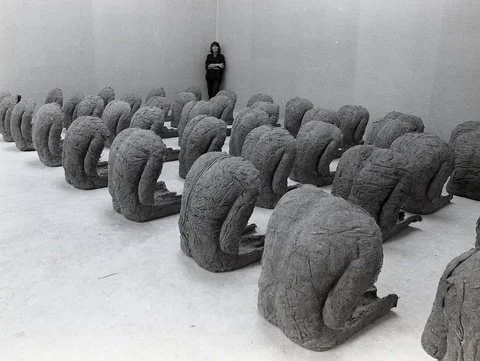
II. DIALOGUE + PARTICIPATION
Dialogue
Across Cultures
Dialogue across cultures explores how visual and artistic expression connect people across differences of language, history, belief, and lived experience. Abakanowicz’s international relationships and use of images as a means of intercultural communication invite dialogues that recognize shared experience amidst cultural distinctiveness.
Public
Engagement
Civic programs and social practice create opportunities to experience and interpret art within community life. Abakanowicz’s environments and public sculptures offer ways to investigate how bodies inhabit space, and how access to public artworks, cultural spaces, and community participation shapes collective experience.
Continuity
in Crisis
Artistic practice, cultural knowledge, and community life are lifelines through war, displacement, and migration. In these and other crises artists need support to continue their work. Abakanowicz’s experiences of war and imposed social doctrines fortified her pursuit of creative freedom and her conviction that art always matters.
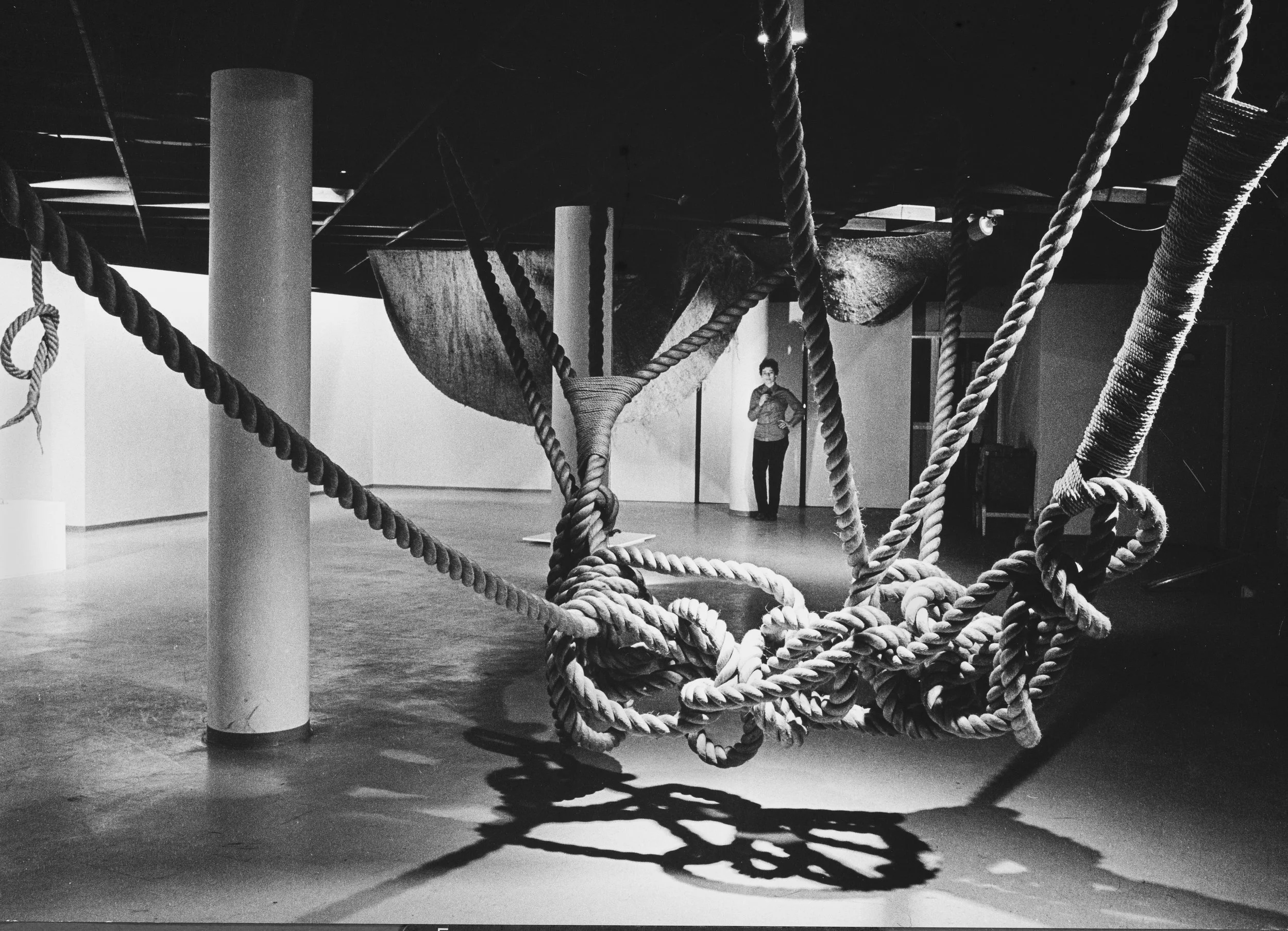
III. MEMORYWORK + KNOWLEDGE
Histories and
Remembrance
Histories and remembrance explore how personal narratives, collective memories, and overlooked experiences are preserved, interpreted, and publicized. Abakanowicz’s engagement with Polish history opened onto wider questions of shared human experience and a probing investigation of the individual within the crowd. Her art invites attention to migration, violence, belonging, and acts of commemoration.
Access to
Knowledge
Access to knowledge concerns the conditions through which people can investigate, contribute to, and share cultural understanding, including research libraries, publications, and digital resources. Abakanowicz’s writings, conversations, and exchanges across fields and cultures offer a model for bringing different forms of understanding into circulation while recognizing local and practice-based knowledge.
Indigeneity and
Living Traditions
Indigeneity and living traditions encompass ancestral, culturally rooted, and localized artistic expressions through which communities transmit and renew knowledge. Abakanowicz’s appreciation of Native peoples’ artistry and religious expression informed her own creative rituals and art forms. Oral traditions, transmitted practices, and Indigenous innovations sustain cultural identity, place relations, and livelihoods.
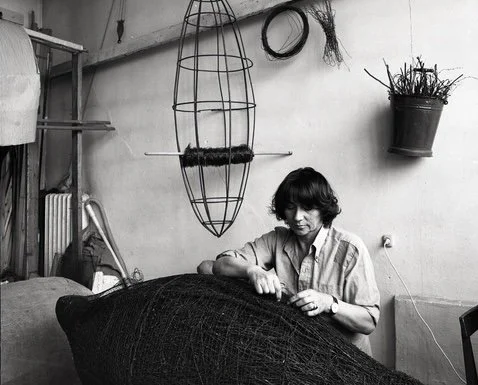
IV. EXPERIENCE + MATERIALITY
Human Imagination
and Repair
Human imagination and repair explore how art can help people respond to trauma, participate in social change, and envision other ways of living. Abakanowicz’s engagement with vulnerability, the dignity of the individual, and the possibilities of imagination resonates with storytelling, acts of care, and efforts to renew connections among people and places.
Consciousness and
Embodied Experience
Consciousness and embodied experience investigate modes of perception, artistic intuition, and sensory awareness. Abakanowicz’s attention to the body’s rhythms, the intuitive origins of form, and the viewer’s physical encounter with her work invites reflection on how images, symbols, and encounters with the unknown shape the ways we sense and make meaning of the world.
Ecological Relations
and Materiality
Ecological and material relations explore the interdependence of human life, other species, and the landscapes that make up our world. Abakanowicz’s work with fiber and organic forms, her attention to structures shared by bodies and plants, and her evocation of female creative power invite reflection on making as a relationship with nature that demands ecological responsibility.